is located within the Vatican City. St. Peter's Basilica has the largest interior of any Christian church in the world, holding 60,000 people. It is the symbolic "Mother church" of the Catholic Church and is regarded as one of the holiest Christian sites. It has been described as "holding a unique position in the Christian world" and as "the greatest of all churches of Christendom".
In Catholic tradition, it is the burial site of its namesake Saint Peter, who was one of the twelve apostles of Jesus and, according to tradition, first Bishop of Rome and therefore first in the line of the papal succession. Tradition and some historical evidence hold that Saint Peter's tomb is directly below the altar of the basilica. For this reason, many Popes have been interred at St Peter's since the Early Christian period. There has been a church on this site since the 4th century. Construction of the present basilica, over the old Constantinian basilica, be

gan on April 18, 1506 and was completed on November 18, 1626.
St. Peter's is famous as a place of pilgrimage, for its liturgical functions and for its historical associations. It is associated with the papacy, with the Counter-reformation and with numerous artists, most significantly Michelangelo di Lodovico Buonarroti Simoni (1475-1564), an Italian Renaissance painter, sculptor, architect, poet, and engineer. Michelangelo took over a building site at which four piers, enormous beyond any constructed since the days of Ancient Rome, were rising behind the remaining nave of the old basilica. He also inherited the numerous schemes designed and redesigned by some of the greatest architectural and engineering brains of the 16th century.
Incidentally there are over 100 tombs within St. Peter's Basilica, many located in the Vatican grotto, beneath the Basilica. These include 91 popes, St. Ignatius of Antioch, Holy Roman Emperor Otto II, and the composer Giovanni Pierluigi da Palestrina. Exiled Catholic British royalty James Francis Edward Stuart and his two sons, Charles Edward Stuart and Henry Benedict Stuart, are buried here, having been granted asylum by Pope Clement XI. The most recent interment was Pope John Paul II, on April 8, 2005.


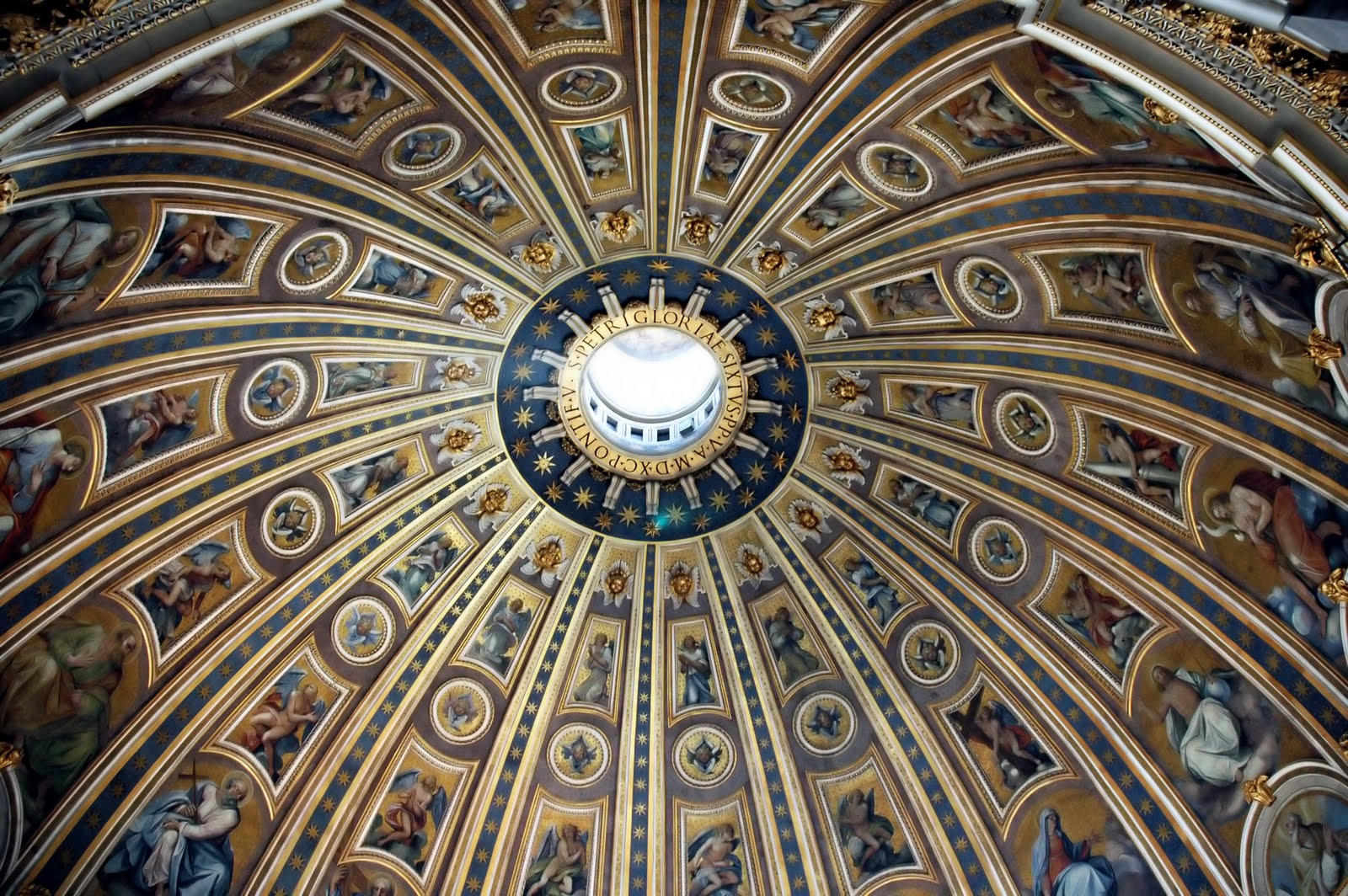 The Papal Basilica of Saint Peter is located within the Vatican City. St. Peter's Basilica has the largest interior of any Christian church in the world, holding 60,000 people. It is the symbolic "Mother church" of the Catholic Church and is regarded as one of the holiest Christian sites. It has been described as "holding a unique position in the Christian world" and as "the greatest of all churches of Christendom".
 gan on April 18, 1506 and was completed on November 18, 1626.


