Showing posts with label Incantato Performance Venues. Show all posts

Wednesday, May 22, 2013

Providence College Choir and Jazz Ensemble in the web

Dear travelers and friends of Providence College Choir and Jazz Ensemble

While overseas, is difficult to get all the media links and prints that happen around a performance tour.
In Incantato, we try to make it easier for you, and therefore we bring you some screenshots of the choral and music related media that can be more relevant to you.

Here you have some samples (we will be adding during the tour):

Levante, the most read newspaper in Valencia Community


Notikumi, Barcelona agenda online


Valencia: Café Mercedes Jazz, a top jazz club in Spain


Sunday, May 19, 2013

The PC Jazz Ensemble performs at the Cafe del Conservatorio del Liceu, in Barcelona, on Wednesday 22 May, 2013

The Providence College Jazz Ensemble will open their "Saxophones and Rhythm" Performance Tour to Spain in the Cafe del Conservatorio del Liceu. The concert will take place on Wednesday 22 may, at 8 pm.


Incantato is happy to announce this performance in a really important and historical institution as the Conservatory of the Liceu, where famous artists like Montserrat Caballe, Pau Casals or Maria Victoria de los Angeles, among others, have grown as artists and musicians.


The Cafe del Conservatorio, with independent access from the street, offers a year-round program on concerts, jam sessions and recitals. 20 feet of stage are waiting on the PC Jazz Ensemble for a wonderful beginning in their Incantato Performance Tour to Spain.

Incantato proudly presents the Providence College Jazz Ensemble at Cafe Mercedes Jazz, Valencia

While visiting the beautiful city of Valencia, third biggest city in Spain, the Providence College Jazz Ensemble is scheduled to perform in the very famous Cafe Mercedes Jazz on Thursday, May 23, 2013.


The PC Jazz Ensemble, under the Direction of Dr. Cristopher Kelton, will perform their "Saxophones and Rhythm" repertoire at 10,30 pm, at the Cafe Mercedes, one of the top Jazz clubs in the country. Their American Jazz repertoire, all arranged by  Michael C. Kregler, will surely be very familiar to the jazzy audience of the Cafe Mercedes Jazz.

Located in the very elegant quarter of Russafa, Cafe Mercedes has a great location, surrounded by a warm atmosphere of restaurants of all styles, a very known area for both locals and visitors.

This is the second concert that the PC Jazz Ensemble has scheduled during their Incantato Performing Tour in Spain, and we certainly expect all Providence College travelers to enjoy this very venue.


Monday, May 13, 2013

PC College Choir, featured choir at the "Traslacion" Holy Mass in Basilica of San Vicente Ferrer, Valencia, Friday 24 may.

Incantato proudly presents a very special Choral Mass: 
Traslación de Santo Domingo 
at the Basilica of San Vicente Ferrer, in Valencia, next Friday 24, at 8pm.


(Front of the Basilica, jdiazarnal)


The Basilica de San Vicente Ferrer, home of the Royal Order of Preachers, celebrates its most important Holy Mass dedicated to the "Traslacion de Santo Domingo", (Saint Dominic traslation). 
The Providence College Choir, together with the Coro del Conservatorio Profesional de Música de Valencia, has been invited to sing at this very special and important Mass. 


(Rosary Chapel, jdiazarnal)
The  Basilica of San Vicente Ferrer was started in 1906 and finished in 1919 in the Neo-gothic style and the architects who worked on it were Francisco Estruch, Joaquin Maria Arnau Miramon, and Francisco Almenar Quinza. The church has a Latin cross ground plan with five naves. The two exterior naves have the chapels. The stained glass windows were made by Maumejean of Madrid and show scenes in the life of San Vicente Ferrer in the main nave, while showing the mysteries of the Rosary in the crossing and presbytery. During the Spanish Civil War, the church was heavily damaged. 
In 1951 Pope Pius XII gave it the title of minor basilica.


Main nave, (jdizarnal)
The central nave has pointed arches and has pilasters and columns that have Corinthian capitals. The façade is very impositng and has two towers (39 meters high) that are topped with needle like spires. There is a rose window on top of the main doorway. The cupola has an octagonal shape and has a height of 45 meters, having eight windows that bring in light and have stained glass that uses Bohemian crystal. The main altar has a canopy and it has the image of San Vicente Ferrer. There is a side chapel of San Jose with an altarpiece dedicated to the Virgin, called the Altar del Rosario, made from wood and alabaster. It was the work of Jose Justo Villalba.

After the Choral Mass, both the Providence College Choir and the choir of the Professional Conservatory of Valencia, will give a short concert, followed by a Reception by the Dominican Friars.

Tuesday, May 7, 2013

Incantato presents Providence College Choir: Chorale Concert at Iglesia de San Pedro, Cuenca, on Saturday 25 May.


The singers of the Providence College Choir, from Rhode Island, will perform at the Church of San Pedro in Cuenca on Saturday, May 25, 2013.


The Church of San Pedro, located within the hilltop town of Cuenca, was built in the twelfth century atop the ruins of an ancient mosque, shortly after the city was conquered by Alfonso VIII. 
In the mid-fifteenth century, the church played an important role as ally to Bishop Lope de Barrientos throughout his battles with Don Diego Hurtado de Mendoa, the Marquis of Canete.

The original church was destroyed in 1499 and rebuilt in 1604 only to fall to ruins once again during the War of Succession in 1700. Later in the eighteenth century, during the Episcopate of Don Jose Florez Osorio, the church, like many others within the diocese of Cuenca, underwent complete renovation under the design of architect Jose Martin de Aldehuela.

The present structure boasts an octagonal shape and a large dome covered in intricate lunette detail. They exterior is a prime example of Baroque architecture. Due to both its vast historical significance as well as its unique architectural value, the Church or San Pedro remains the most recognized church in all of Cuenca.

Wednesday, April 24, 2013

Incantato Performance venue: Dominican Basilica of Our Lady of Atocha, Tuesday 28 May - 8 pm: Holy Mass and Choral Concert.

The Providence College Choir will be featured choir on the Royal Basilica of Our Lady of Atocha, where they will sing during Holy Mass, and they will offer a Choral Concert at 8pm, on Tuesday 28 May.

Our Lady of Atocha is the Patron of the Royal House of Spain, Custodian of the Dominicans.

The Royal Basilica of Our Lady of Atocha or Real Basílica de Nuestra Señora de Atocha is one of the three basilica churches in Madrid.
The buildings on the site have a long history. There was a the shrine to Our Lady of Atocha, a Spanish contraction for “Theotokos”, meaning “Mother of God,” or a simplification of “Antiocha” which in the 12th Century under this title was already ancient and beloved.
Our Lady of Atocha chapel was already in Madrid when there was only a field of reeds and a hermitage. The Moor and the Muslim times came – they respected her and left her alone.
When Toledo was sacked in 1170, she remained there, but at some point some sculptures dissappeared.
The original name "Atocha" refers to a lost sculpture of Our Lady, from this former chapel, which was found among some high grasses, (called Tocha) during the time of the Reconquista.

The parish was entrusted to the Dominican Order in 1523, and still is today.
 In 1525 Charles V brought her his bride and asked her blessing upon their marriage; Don Juan of Austria, departing for the Battle of Lepanto, knelt at her feet and pledged his sword to her; after his victory he sent in thanksgiving his sword to her along with the captured Moorish banners.
Despite all these trappings of the high and wealthy, she still remains Our Lady of all the people, beloved of kings and farmers, such as St Isidore.
In 1863, the temple was elevated to the rank of Basilica by Pius IX

The old church was in disrepair and rebuilt in the 1890s in a Neo-Byzantine style designed by Fernando Arbós y Tremanti. The church was destroyed during the Spanish Civil War and reconstruction completed in 1951.

Atocha is Madrid’s royal shrine: there is not a Spaniard of public importance for a thousand years who would not kneel to ask her help. Her gowns are made from the bridal gowns of queens

Monday, April 22, 2013

Incantato performance venue: Providence College Choir will perform Holy Mass at Santa Catalina Convent - Barcelona, Wednesday May 22, 8:00 pm

Our travelers from the Providence College Choir will start their Incantato performance Tour in Spain in the city of Barcelona, where they will perform Holy Mass at the Dominican Convent of Santa Catalina, on Wednesday 22, at 8 pm.


The Convent of St. Catherine, Virgin and Martyr, in Barcelona was founded in 1219, and according to tradition, during a stay of Santo Domingo in the city.
The Convent of the Preachers of Barcelona was prompted by the Bishop Berenguer of Palou (Bishop of Barcelona between 1212 and 1241).


First Convent site memorial (monastir.cat)
 Returning from Rome and passing through Bologna, the bishop came into contact with the Dominicans and requested the establishment of a Convent in Barcelona. Those efforts were successful and in 1219 the first Dominicans arrived to the city. The location of the first Community of Preachers was in the Jewish quarter (now Carrer de Sant Domènech 39; at the Call old quarter). They settled in some houses in the neighborhood, and made use of the nearby church of Sant Jaume (in the square of this name, and no longer existing), for liturgical celebrations.


In 1221 a bull of Pope Honorius III, asked the Bishop Berenguer to care for the Preachers that were arrivng into the city.  
Saint Ramon of Penyafort, Cathedral of Barcelona (monastir.cat)
In 1223 it became necessary to build a new convent more spacious. King James I favored the initiative and, with the help of many citizens, built a magnificent Gothic building, right in the current Plaza de Santa Catalina.

This Convent became a great center of evangelization, with great social and cultural influence in Catalonia until 1835, when it was sold off and demolished. The Community of the Dominicans was restored in 1889, and since the beginning of s. XX was at Bailen street and Marc Ausiàs.
This Community is a continuation of a long tradition of over 800 years, with such prominent figures as Saint Ramon de Penyafort, Saint Francis Gil de Frederich or Exart Lluis Beat, among others.


Sunday, May 22, 2011

Providence College performs at St. Peter's Basilica (Rome) on Sunday, May 22, at 5:30 PM

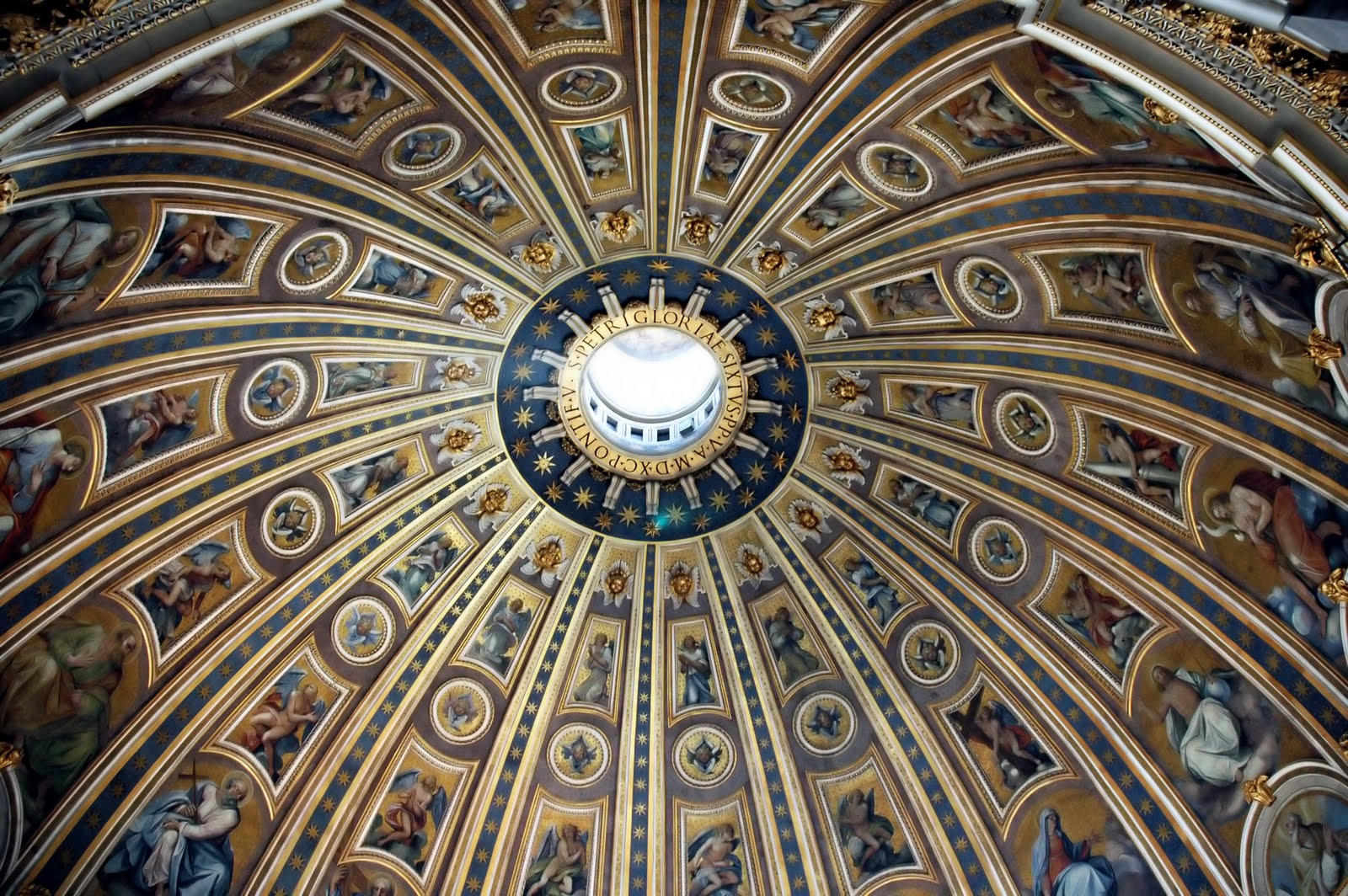
The Papal Basilica of Saint Peter is located within the Vatican City. St. Peter's Basilica has the largest interior of any Christian church in the world, holding 60,000 people. It is the symbolic "Mother church" of the Catholic Church and is regarded as one of the holiest Christian sites. It has been described as "holding a unique position in the Christian world" and as "the greatest of all churches of Christendom".
In Catholic tradition, it is the burial site of its namesake Saint Peter, who was one of the twelve apostles of Jesus and, according to tradition, first Bishop of Rome and therefore first in the line of the papal succession. Tradition and some historical evidence hold that Saint Peter's tomb is directly below the altar of the basilica. For this reason, many Popes have been interred at St Peter's since the Early Christian period. There has been a church on this site since the 4th century. Construction of the present basilica, over the old Constantinian basilica, began on April 18, 1506 and was completed on November 18, 1626.
St. Peter's is famous as a place of pilgrimage, for its liturgical functions and for its historical associations. It is associated with the papacy, with the Counter-reformation and with numerous artists, most significantly Michelangelo di Lodovico Buonarroti Simoni (1475-1564), an Italian Renaissance painter, sculptor, architect, poet, and engineer. Michelangelo took over a building site at which four piers, enormous beyond any constructed since the days of Ancient Rome, were rising behind the remaining nave of the old basilica. He also inherited the numerous schemes designed and redesigned by some of the greatest architectural and engineering brains of the 16th century.
Incidentally there are over 100 tombs within St. Peter's Basilica, many located in the Vatican grotto, beneath the Basilica. These include 91 popes, St. Ignatius of Antioch, Holy Roman Emperor Otto II, and the composer Giovanni Pierluigi da Palestrina. Exiled Catholic British royalty James Francis Edward Stuart and his two sons, Charles Edward Stuart and Henry Benedict Stuart, are buried here, having been granted asylum by Pope Clement XI. The most recent interment was Pope John Paul II, on April 8, 2005.

Saturday, May 21, 2011

PC College Choir the "special musical guest" for Cardinal Law at Santa Maria Maggiore in Rome

We are very excited at Incantato Tours to having managed that the Providence College Choir is the "special musical guest" today at Santa Maria Maggiore in Rome for a High Mass honoring Cardinal Law - a fellow American in Italy. 
The Basilica Papale di Santa Maria Maggiore, or Papal Basilica of Saint Mary Major, is an ancient Catholic Marian Basilica of Rome. The church is believed to have been constructed under the reign of Pope Sixtus III between the years of 432 and 440. It is considered one of the four major papal basilicas, and together with Saint Lawrence outside the Walls, was formerly referred to as part of the five “patriarchal basilicas” of Rome associated with the five ancient sees of Christendom. Also known as the Liberian Basilica, the church was formerly presided over by Pope Liberius who housed many congregations of early Christians in Rome. Santa Maria Maggiore stands as the only Roman basilica that retained the core of its original structure, left intact since its original construction even following the earthquake of 1348.
The name Santa Maria Maggiore reflects two very important ideas of greatness, that of a major papal basilica and that of the largest Roman church dedicated to the Virgin Mary.
Following the formal ending of the Avignon papacy when the papacy officially returned to Rome, Santa Maria Maggiore served as the temporary Palace of the Popes due to the deteriorated state of the Lateran Palace. The papal residence was later moved to the Palace of the Vatican, now Vatican City. 
Photo courtesy of Wikipedia. 

Thursday, May 19, 2011

Providence College Choir perform at Chiesa di San Francesco, Maiori - Friday, May 20, at 8:00 PM

Incantato Tours proudly presents the Providence College Choir  in concert at Chiesa di San Francesco in Maiori at 8:00 PM on Friday, May 20, 2011.

The beautiful Chiesa di San Francesco was constructed in 1405. It is located between the convent and the Cove of the Announced one (Grotta dell'Annunziata) in Maiori. The church has a rough history: In 1435 it was destroyed by the army of Muhammad II (Turkey) and rebuilt one year later by Saint Bernardino from Siena. A sea storm hit the Chiesa di San Francesco hard in 1440. It was destroyed and in 1517 reconstructed on the oriental side of the convent. But the work was interrupted again by a Turkish invasion. In 1590 the construction was finally completed. Last but not least there were several constructive modifications after two seas storm in 1631 and 1674. The church is famed world-wide for the miracle of the springing water in the convent. Please click here to go the picture's origin.

Wednesday, May 18, 2011

Incantato Tours presents the Providence College Choir at Montecassino Abbey on Wednesday, May 18 at 10:00 AM

The Providence College Choir, their family and friends of Providence, Rhode Island will tour the Benedictine Abbey of Monte Cassino on Wednesday, May 18, 2011, where the choir will also perform a brief recital.

Monte Cassino is a rocky mountain approximately 80 miles southeast of Rome. Saint Benedict of Nursia established his first monastery here, the source and foundation of the Benedictine Order, in 529. The monastery stands as one of the few territorial abbeys remaining within the Catholic Church. According the Gregory the Great’s biography of Saint Benedict, the monastery was constructed on an older pagan sight, a temple of Apollo that originally crowned the hill. The biography claims that Benedict’s first act was to smash the sculpture of Apollo and destroy the pagan altar. He then reused the temple, dedicating it to Saint Martin, and built a new chapel which he dedicated to Saint John the Baptist. Once established at Monte Cassino, Benedict never left. There he penned the Benedictine Rule which ultimately became the founding principle of western monasticism. Monte Cassino became the model for future Benedictine developments throughout the world. Unfortunately the Abbey has fallen target to numerous military insurgencies throughout the years, including the infamous 1944 Battle of Monte Cassino. On February 15, 1944, the Abbey was almost completely destroyed by Allied air-raids after being mistakenly identified as a German stronghold. In fact, the Abbey was being used as a refuge for women and children attempting to shield themselves from the war. The Abbey was rebuilt after the war, financed by the Italian State, and was reconsecrated by Pope Paul VI in 1964.

Providence College 2011 Italy Tour Performance Overview


Monday, May 9, 2011

Providence College Choir and Symphonic Winds performance venue for Monday, May 23 at 11:00 A.M.: Saint Fra.ncis Basilica, Assisi


Providence College Choir and Symphonic Winds, of Providence, Rhode Island, will participate in High Mass in the Chapel of Saint Catherine within Saint Francis Basilica on Monday, May 23, 2011 at 11:00 AM. The Papal Basilica of St. Francis of Assisi, better known as the St. Francis Basilica, is the mother church of the Roman Order of Friars Minor, or the Franciscan Order. Assisi is the birthplace of St. Francis, a Catholic deacon, preacher, and founder of the Franciscan Order. The Catholic Church also recognizes St. Francis as the patron saint of animals, the environment, and one of the two patron saints of Italy along with St. Catherine of Siena. Serving as the final resting place of St. Francis, the Basilica remains one of Italy’s most important destinations of Christian pilgrimage. Founded in 1228, St. Francis Basilica is built into a hillside and comprises two separate churches known as the upper and lower basilicas and the crypt of the interred saint. The interior of the upper church exemplifies early Gothic architecture, and both churches flaunt intricate frescoes by late medieval painters from the Roman and Tuscan schools. Along with the accompanying friary, the basilica is recognized as a UNESCO World Heritage Site and valuable landmark in the Assisi community.

Friday, October 8, 2010

Providence College Choir and Symphonic Winds perform at Basilica Sant'Agnese in Agone (Rome) on May 25, 6:30 PM

The singers and musicians of Providence College will present a concert at Rome's Basilica Sant'Agnese in Agone at 6:30 PM on Wednesday, May 25, 2011.
The Basilica Sant’Agnese in Agone in Rome was constructed in 1652 on the site of Saint Agnes’ martyrdom, now the location of the Piazza Navona. The designs for the Baroque church were commissioned by Pope Innocent X, whose funerary monument now lies within the church. The Pope’s family even had a large palace adjacent to the church. Baroque architect Francesco Borromini ultimately introduced a concave volume in the center of the sanctuary, creating prime acoustics for vocal music. Visitors enjoy the interior’s premier sculptural artwork, accented by the marble relief found in the main altar, as well as Bernini’s famous Fountain of the Four Rivers that lies in front of the church.

Incantato performance venue: Mass at Santa Maria Maggiore Basilica, Rome - Tuesday, May 24, 2011, 6:00 PM

The Providence travelers will perform mass at Santa Maria Maggiore Basilica in Rome at 6:00 PM on Tuesday, May 24, 2011. The Basilica Papale di Santa Maria Maggiore, or Papal Basilica of Saint Mary Major, is an ancient Catholic Marian Basilica of Rome. The church is believed to have been constructed under the reign of Pope Sixtus III between the years of 432 and 440. It is considered one of the four major papal basilicas, and together with Saint Lawrence outside the Walls, was formerly referred to as part of the five “patriarchal basilicas” of Rome associated with the five ancient sees of Christendom. Also known as the Liberian Basilica, the church was formerly presided over by Pope Liberius who housed many congregations of early Christians in Rome. Santa Maria Maggiore stands as the only Roman basilica that retained the core of its original structure, left intact since its original construction even following the earthquake of 1348.The name Santa Maria Maggiore reflects two very important ideas of greatness, that of a major papal basilica and that of the largest Roman church dedicated to the Virgin Mary. Following the formal ending of the Avignon papacy when the papacy officially returned to Rome, Santa Maria Maggiore served as the temporary Palace of the Popes due to the deteriorated state of the Lateran Palace. The papal residence was later moved to the Palace of the Vatican, now Vatican City.

Tuesday, October 5, 2010

Visit Monte Cassino


Monte Cassino is a rocky mountain approximately 80 miles southeast of Rome. Saint Benedict of Nursia established his first monastery here, the source and foundation of the Benedictine Order, in 529. The monastery stands as one of the few territorial abbeys remaining within the Catholic Church.
According the Gregory the Great’s biography of Saint Benedict, the monastery was constructed on an older pagan sight, a temple of Apollo that originally crowned the hill. The biography claims that Benedict’s first act was to smash the sculpture of Apollo and destroy the pagan altar. He then reused the temple, dedicating it to Saint Martin, and built a new chapel which he dedicated to Saint John the Baptist. Once established at Monte Cassino, Benedict never left. There he penned the Benedictine Rule which ultimately became the founding principle of western monasticism. Monte Cassino became the model for future Benedictine developments throughout the world.
Unfortunately the Abbey has fallen target to numerous military insurgencies throughout the years, including the infamous 1944 Battle of Monte Cassino. On February 15, 1944, the Abbey was almost completely destroyed by Allied air-raids after being mistakenly identified as a German stronghold. In fact, the Abbey was being used as a refuge for women and children attempting to shield themselves from the war. The Abbey was rebuilt after the war, financed by the Italian State, and was reconsecrated by Pope Paul VI in 1964.

Sunday, August 22, 2010

Incantato Performance Venue: St. Peter’s Basilica in Vatican City confirmed for PC on May 22


Now if that is not the best way to start "dreaming" about the Providence College Italy Performance Tour 2011, by knowing already that you will be perfoming in the most important Catholic cathedral on May 22 at 5:30 pm.
The Papal Basilica of Saint Peter is located within the Vatican City. St. Peter's Basilica has the largest interior of any Christian church in the world, holding 60,000 people. It is the symbolic "Mother church" of the Catholic Church and is regarded as one of the holiest Christian sites. It has been described as "holding a unique position in the Christian world" and as "the greatest of all churches of Christendom".
In Catholic tradition, it is the burial site of its namesake Saint Peter, who was one of the twelve apostles of Jesus and, according to tradition, first Bishop of Rome and therefore first in the line of the papal succession. Tradition and some historical evidence hold that Saint Peter's tomb is directly below the altar of the basilica. For this reason, many Popes have been interred at St Peter's since the Early Christian period. There has been a church on this site since the 4th century. Construction of the present basilica, over the old Constantinian basilica, began on April 18, 1506 and was completed on November 18, 1626.
St. Peter's is famous as a place of pilgrimage, for its liturgical functions and for its historical associations. It is associated with the papacy, with the Counter-reformation and with numerous artists, most significantly Michelangelo di Lodovico Buonarroti Simoni (1475-1564), an Italian Renaissance painter, sculptor, architect, poet, and engineer. Michelangelo took over a building site at which four piers, enormous beyond any constructed since the days of Ancient Rome, were rising behind the remaining nave of the old basilica. He also inherited the numerous schemes designed and redesigned by some of the greatest architectural and engineering brains of the 16th century.
Incidentally there are over 100 tombs within St. Peter's Basilica, many located in the Vatican grotto, beneath the Basilica. These include 91 popes, St. Ignatius of Antioch, Holy Roman Emperor Otto II, and the composer Giovanni Pierluigi da Palestrina. Exiled Catholic British royalty James Francis Edward Stuart and his two sons, Charles Edward Stuart and Henry Benedict Stuart, are buried here, having been granted asylum by Pope Clement XI. The most recent interment was Pope John Paul II, on April 8, 2005.

Saturday, August 7, 2010

Possible performance venue: Sant'Agnese in Agone, Rome

The Basilica Sant’Agnese in Agone in Rome was constructed in 1652 on the site of Saint Agnes’ martyrdom, now the location of the Piazza Navona. The designs for the Baroque church were commissioned by Pope Innocent X, whose funerary monument now lies within the church. The Pope’s family even had a large palace adjacent to the church. Baroque architect Francesco Borromini ultimately introduced a concave volume in the center of the sanctuary, creating prime acoustics for vocal music. Visitors enjoy the interior’s premier sculptural artwork, accented by the marble relief found in the main altar, as well as Bernini’s famous Fountain of the Four Rivers that lies in front of the church.

Monday, March 15, 2010

Incantato Performance Venue: St. Paul’s Cathedral in Mdina

St. Paul's Cathedral is a Roman Catholic cathedral in the city of Mdina, in Malta. It is built on the site where governor Publius was reported to have met Saint Paul following his shipwreck off the Maltese coast.
According to tradition, the first Cathedral of Malta was dedicated to the Blessed Virgin, Mother of God but, having fallen into ruin during the Muslim period, it was rebuilt following the Norman conquest and re-dedicated to St Paul. The old church was modified and enlarged several times. The building we can see today was designed by the architect Lorenzo Gafa, it was built between 1697 and 1702 to replace a ruined Norman cathedral destroyed by the 1693 earthquake on Malta. Despite this, several artifacts and edifices survived including the painting by the Calabrian artist Mattia Preti depicting the conversion of Saint Paul, a 15th century Tuscan painting of the Madonna and Child, and frescoes in the apse which illustrate Paul's shipwreck.
St. Paul's Cathedral is a fine structure, designed by architect Lorenzo Gafa. Its impressive façade wows visitors as they emerge from Mdina’s narrow streets. The cathedral's magnificent dome, with red-and-white stripes, dominates the skyline. The dome's interior has been decorated by a succession of painters; today’s decoration dates from the 1950s. The lavish interior of the cathedral is similar in many ways to the Cathedral of St. John in Valetta. There are great works by the Calabrian artist and knight Mattia Preti and a marble-inlaid floor with tombstones carrying the coats of arms and inscriptions of the bishops of Mdina and other members of the cathedral chapter. Surviving from the original Norman church is a monumental depiction of the conversion of St. Paul by Mattia Preti, between the apse and main altar. Also surviving from the old church are: the 15th-century Tuscan panel painting of the Madonna and Child; the baptismal font; the frescoes in the apse depicting St. Paul’s shipwreck; and the old portal, made of carved Irish bog wood, which now serves as a door to the vestry. The cathedral's museum has a collection of coins, silver plate, religious vestments and some woodcuts by the German artist Albert Dürer.

Incantato Performance Venue: Basilica di Santa Maria in Trastevere


Incantato Tours sends singers to hidden gems - like the Basilica di Santa Maria in Trastevere in Rome. Have a closer look at this venue:

The Basilica of Our Lady's in Trastevere (Italian: Basilica di Santa Maria in Trastevere) is a titular minor basilica, one of the oldest churches in Rome, perhaps the first in which mass was openly celebrated. The basic floor plan and wall structure of the church date back to the 340s AD. The inscription on the episcopal chair states that it is the first church dedicated to the Mother of God, although some claim that privilege belongs to the Basilica di Santa Maria Maggiore. In its foundation it is certainly one of the oldest churches in the city. A Christian house-church was founded here about 220 by Pope Saint Callixtus I. (217-222) on the site of the Taberna meritoria, an asylum for retired soldiers. The area was given over to Christian use by the Emperor Septimius Severus when he settled a dispute between the Christians and tavern-keepers. In 340 Pope Julius I. (337-352) rebuilt the titulus Callixti on a larger scale, and it became the titulus Iulii commemorating his patronage, one of the original twenty-five parishes in Rome; indeed it may be the first church in which Mass was celebrated openly. It underwent two restorations in the fifth and eighth centuries. In 1140-43 the church was re-erected on its old foundations under Pope Innocent II. Innocent II. razed the church, along with the recently completed tomb of his former rival Pope Anacletus II., to the ground, and arranged for his own burial on the spot formerly occupied by that tomb. The present nave preserves its original (pre-12th century) basilica plan and stands on the earlier foundations. The 22 granite columns with Ionic and Corinthian capitals that separate the nave from the aisles came from the ruins of the Baths of Caracalla, as did the lintel of the entrance door.
The picture is from the official website of the church. And here is a video taken during the 2008 Incantato Performance Tour for the Chapman University Choirs directed by Dr. Joseph Modica at Santa Maria in Trastevere which was attended by around 800 guests from all over the world.