Tuesday, September 25, 2012

Ready to travel to Spain?


Providence College Choirs 2012 Spain Performance Tour Slideshow: Incantato’s trip to 4 cities Barcelona, Cuenca, Valencia (near Chiva, Valencia Province, Spain) and Spain (near Cabanas, Galicia) was created with TripAdvisor TripWow!

Incantato Welcomes You to Spain


Spain, officially the Kingdom of Spain, is a member state of the European Union located in southwestern Europe on the Iberian Peninsula. Its mainland is bordered to the south and east by the Mediterranean Sea except for a small land boundary with the British Overseas Territory of Gibraltar; to the north by France, Andorra, and the Bay of Biscay; and to the northwest and west by the Atlantic Ocean and Portugal. Spanish territory also includes the Balearic Islands in the Mediterranean, the Canary Islands in the Atlantic Ocean off the African coast, and two autonomous cities in North Africa, Ceuta and Melilla, that border Morocco.

With an area of 504,030 km², Spain is the second largest country in Western Europe and the European Union after France. Since January 1, 2010, Spain has held the Presidency of the Council of the European Union.

Because of its location, the territory of Spain was subject to many external influences, often simultaneously, since prehistoric times and through the dawn of Spain as a country. Conversely, the country itself has been an important source of influence to other regions, chiefly during the Modern Era, when it became a global empire that has left a legacy of over 400 million Spanish speakers today, making it the world's second most spoken language by native speakers. Spain is a democracy organized in the form of a parliamentary government under a constitutional monarchy.

Spain is a developed country with the ninth or tenth largest economy in the world by nominal GDP, and very high living standards.

Monday, September 10, 2012

Comida Espanola - the foodie side of Incantato


While traveling in Spain, there might be some types of food that you have not encountered before. Especially the typical Spanish ‘Tapas’, a wide assortment of appetizers or snacks, offer up a great variety of Spanish dishes and foods. Tapas may be cold or warm and were designed to encourage conversation while eating because people do not have to focus upon an entire meal.

Some of the most typical and essential ingredients for any meal are chorizo (spicy sausage),
jamón iberico (Iberian ham) and jamón serrano (cured ham). Ham is cherished in Spain as as much champagne is in France. The process of curing it takes a couple of years. Chorizo is a type of spicy sausage, either sliced thinly and served cold on bread or cut into chunks and cooked.

Another extremely typical Tapas dish and Spain’s very own fast food are patatas bravas. They are chopped, fried potatoes (basically potato wedges) that are covered either in a very spicy tomato sauce or a mayonnaise olive oil garlic sauce.

Speaking of fast food, another one of Spain’s favorites is the tortilla española. The plain ones are simply made with just eggs, potatoes and onions, cooked together in an omelet-type combination, then cut into pie slices and served. Variations include shrimp cooked inside or cheese melted on top.

The last dish often comes as a bit of a shock to people. It looks likes tomato soup, but careful - it is cold! This typical appetizer is a mixture of pureed tomatoes, cucumbers and a few other ingredients, topped with croutons. If you are traveling in
southern Spain, however, be sure to watch out for salmorejo on restaurant menus. This is the regional variation of Gazpacho and a bit more flavorful. A combination of tomatoes, bread, oil, garlic and vinegar, salmorejo is much thicker than Gazpacho because it includes more bread. It is also typically served with diced jamón serrano and diced hard-boiled eggs on top.

Crista’s personal favorites include the tortilla española and the salmorejo. Check out the recipe linked to the tortilla española to try this dish at home. Yum!

Monday, May 7, 2012

Time to diet now, not next May

Wednesday, January 11, 2012

Providence College Choirs touring Spain in 2013

Where to next? After touring Italy and the Vatican State in 2011, the Providence College Choir will be heading to Spain in May of 2013. 

Tuesday, May 24, 2011

Monday, May 23, 2011

Sunday, May 22, 2011

The Choir Sings at Mass in St. Peter's


The choir had the privileged of singing at mass held by the Cardinal at St. Peter's Basilica.

Providence College performs at St. Peter's Basilica (Rome) on Sunday, May 22, at 5:30 PM

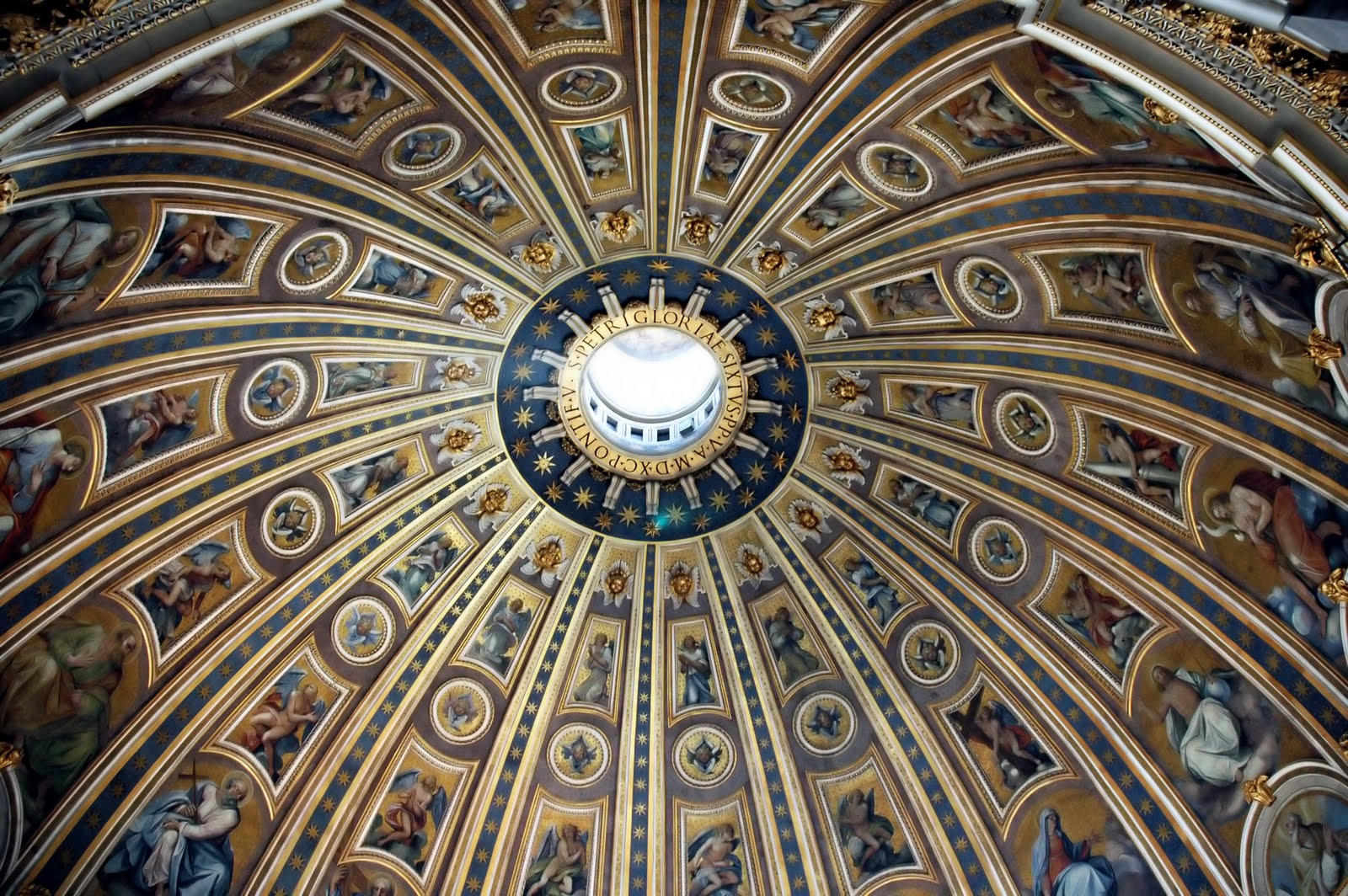
The Papal Basilica of Saint Peter is located within the Vatican City. St. Peter's Basilica has the largest interior of any Christian church in the world, holding 60,000 people. It is the symbolic "Mother church" of the Catholic Church and is regarded as one of the holiest Christian sites. It has been described as "holding a unique position in the Christian world" and as "the greatest of all churches of Christendom".
In Catholic tradition, it is the burial site of its namesake Saint Peter, who was one of the twelve apostles of Jesus and, according to tradition, first Bishop of Rome and therefore first in the line of the papal succession. Tradition and some historical evidence hold that Saint Peter's tomb is directly below the altar of the basilica. For this reason, many Popes have been interred at St Peter's since the Early Christian period. There has been a church on this site since the 4th century. Construction of the present basilica, over the old Constantinian basilica, began on April 18, 1506 and was completed on November 18, 1626.
St. Peter's is famous as a place of pilgrimage, for its liturgical functions and for its historical associations. It is associated with the papacy, with the Counter-reformation and with numerous artists, most significantly Michelangelo di Lodovico Buonarroti Simoni (1475-1564), an Italian Renaissance painter, sculptor, architect, poet, and engineer. Michelangelo took over a building site at which four piers, enormous beyond any constructed since the days of Ancient Rome, were rising behind the remaining nave of the old basilica. He also inherited the numerous schemes designed and redesigned by some of the greatest architectural and engineering brains of the 16th century.
Incidentally there are over 100 tombs within St. Peter's Basilica, many located in the Vatican grotto, beneath the Basilica. These include 91 popes, St. Ignatius of Antioch, Holy Roman Emperor Otto II, and the composer Giovanni Pierluigi da Palestrina. Exiled Catholic British royalty James Francis Edward Stuart and his two sons, Charles Edward Stuart and Henry Benedict Stuart, are buried here, having been granted asylum by Pope Clement XI. The most recent interment was Pope John Paul II, on April 8, 2005.